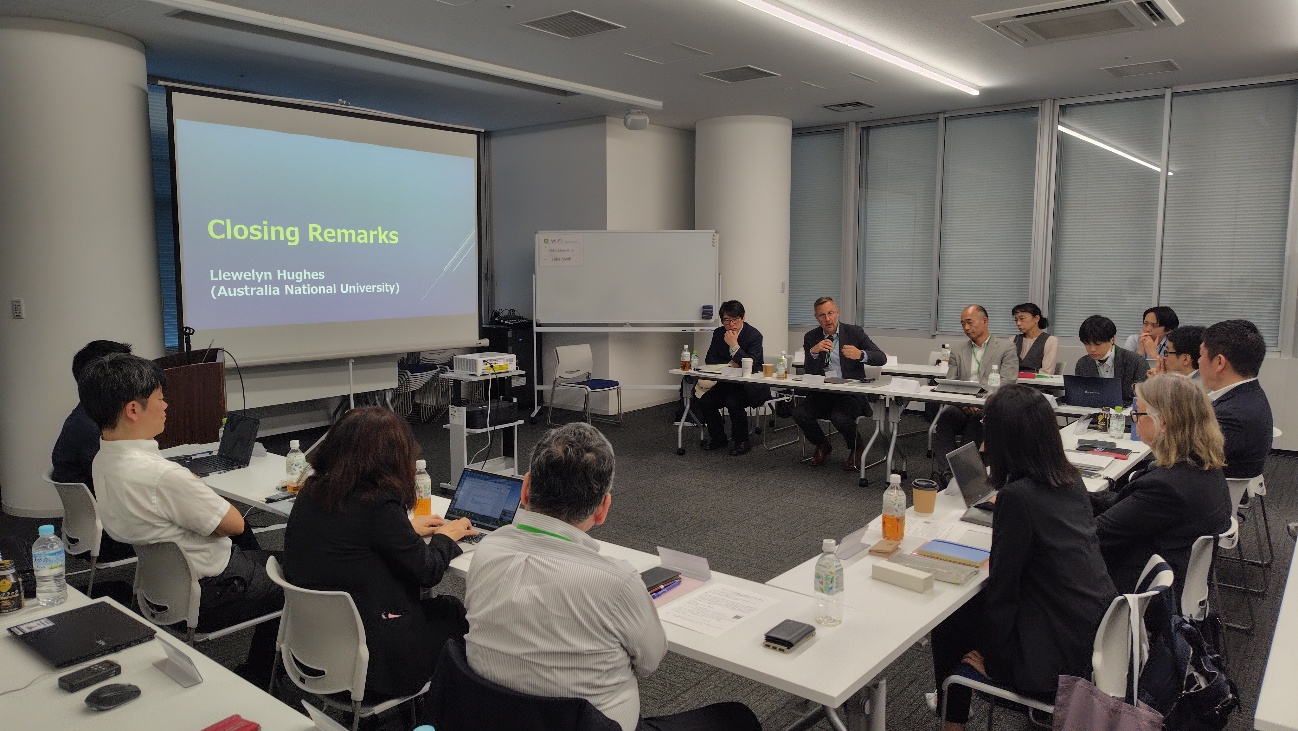
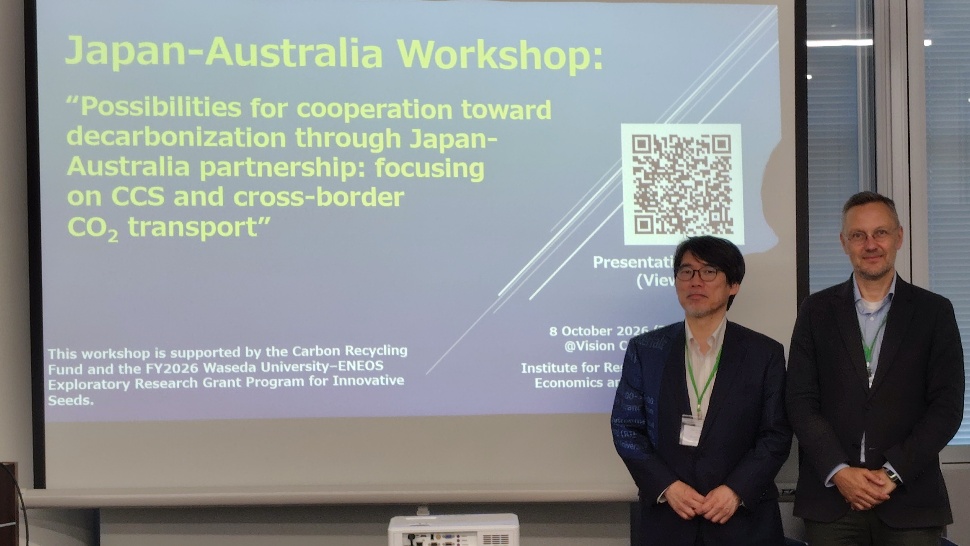
On October 8, 2026, the Japan–Australia Workshop, entitled “Possibilities for Cooperation Toward Decarbonization Through Japan-Australia Partnership: Focusing on CCS and Cross-Border CO₂ Transport,” was held at Vision Center Tokyo Toranomon. The workshop brought together more than 20 experts and industry representatives from Japan and Australia to discuss opportunities for bilateral cooperation on decarbonization, with a particular focus on carbon capture and storage (CCS) and cross-border CO₂ transport.
The workshop began with opening remarks by Professor Toshi H. Arimura, Director of the Research Institute for Environmental Economics and Management at Waseda University. Professor Arimura outlined the objectives of the workshop and introduced the speakers.
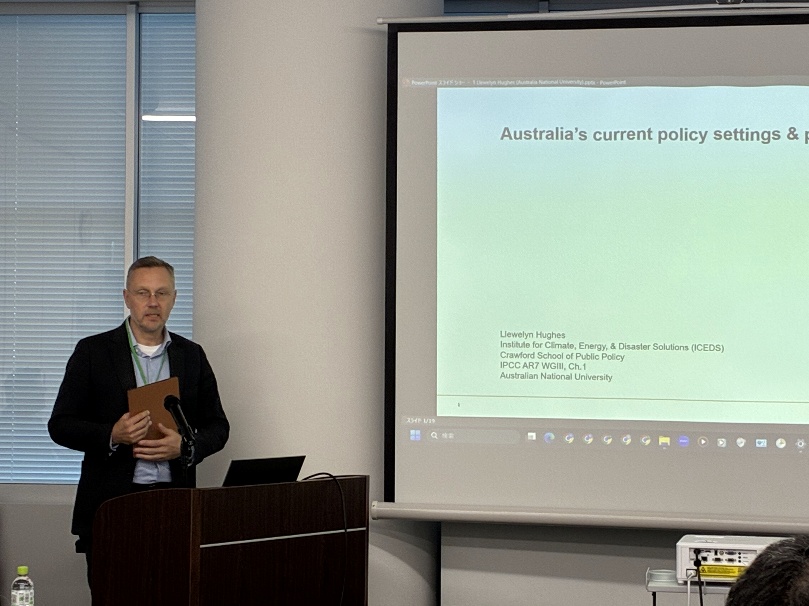
The first presentation was delivered by Professor Llewelyn Hughes of the Australian National University, who provided an overview of Australia’s climate change policies. His presentation highlighted key features of Australia’s climate policy framework, including the issuance of Australian Carbon Credit Unit (ACCU) for CCS projects.
Next, Ms. Jane Burton of The CarbonNet gave a presentation on CCS developments in Australia. Following an Acknowledgement of Country paying respect to Australia’s Aboriginal and Torres Strait Islander peoples, she discussed the current landscape of CCS in Australia, the role of the Safeguard Mechanism in promoting CCS, and The CarbonNet’s initiatives to advance CCS deployment.
Mr. Takashi Yoshimura of Japan’s Ministry of Economy, Trade and Industry (METI) then presented Japan’s CCS policies. His presentation covered Japan’s regulatory framework for CCS, including the CCS Business Act, the progress of advanced CCS projects, and initiatives to promote carbon capture, utilization and storage (CCUS) and carbon recycling.
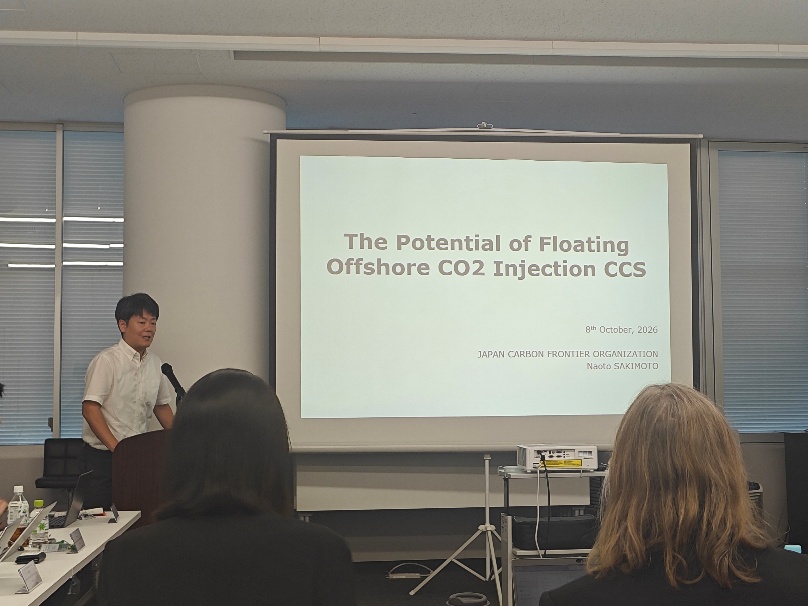
The final presentation was delivered by Mr. Naoto Sakimoto of the JCOAL, who discussed the potential of floating offshore CO₂ injection systems. He explained the concept of injecting CO₂ directly into subseabed geological formations from floating offshore facilities, highlighting the advantages of this approach and its potential CO₂ storage capacity.
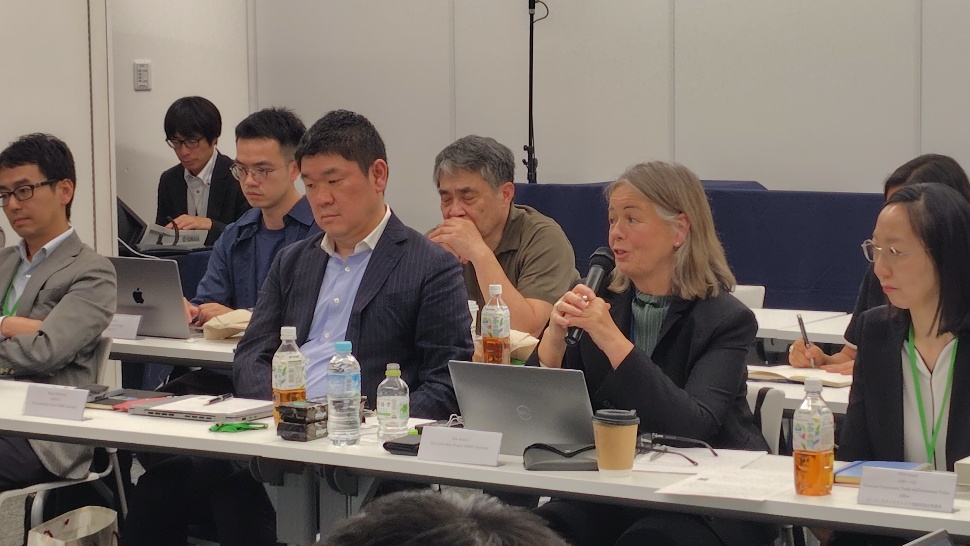
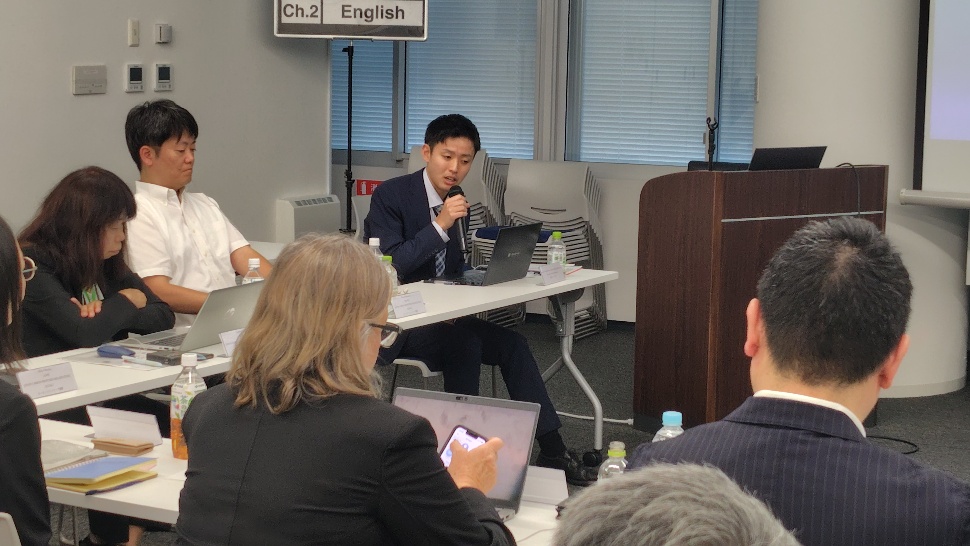
Following the presentations, a question-and-answer session was held, beginning with comments from Professor Arimura and Professor Masahiro Sugiyama of the University of Tokyo. The discussion involved both academic researchers and industry representatives, who raised questions and exchanged views on opportunities for Japan–Australia cooperation in advancing decarbonization.
The workshop concluded with closing remarks by Professor Llewelyn Hughes of the Australian National University. The event provided a valuable opportunity for experts and industry stakeholders from both countries to exchange knowledge and perspectives on CCS and cross-border CO₂ transport, and concluded successfully after a lively and productive discussion.